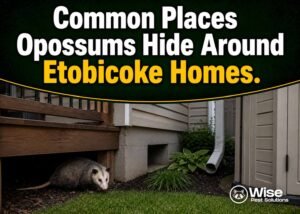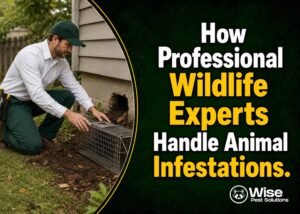
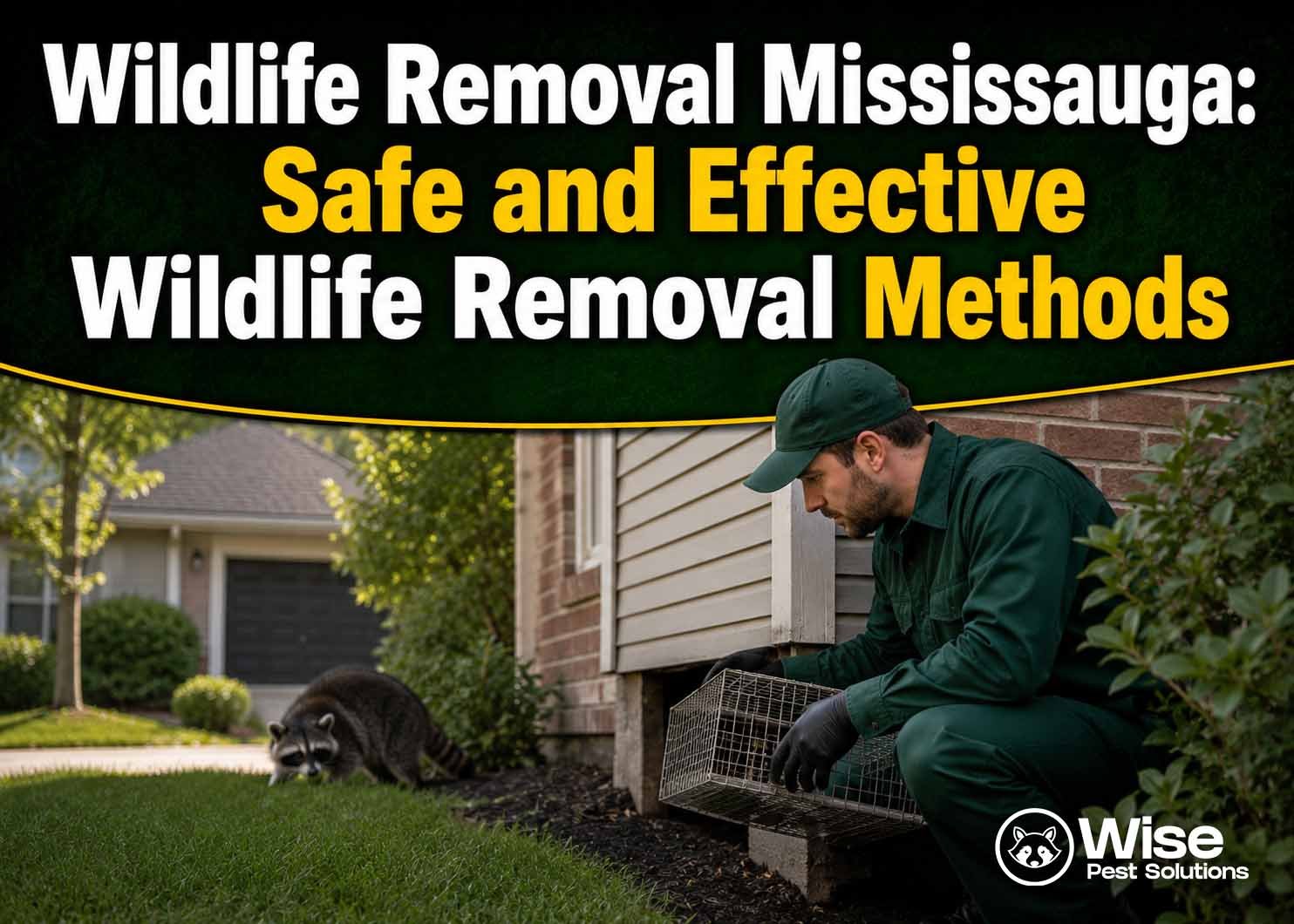
Scratching above the ceiling usually starts as an occasional sound. A few days later, it may become louder in the morning or at night. You might also notice a damaged roof vent, droppings in the attic, disturbed garbage, or digging below the deck.
These signs should not be ignored. Wildlife can damage insulation, vents, soffits, wiring, storage materials, and exterior coverings while searching for shelter.
Professional wildlife removal services Mississauga property owners hire should identify the animal, locate every active entry point, remove the wildlife carefully, and secure the structure against another entry.
TL;DR: Safe wildlife removal begins with an inspection, correct species identification, and a humane removal plan. The opening should only be sealed after the technician confirms that no animal or dependent young remain inside. Exclusion, cleanup, repairs, and attractant control help prevent the problem from returning.
Objective
This guide explains how humane wildlife removal works, which methods professionals use, when property owners should call for help, what affects service costs, and how Mississauga homes and businesses can prevent repeat wildlife activity.
Key Takeaways
- Scratching, droppings, odours, and damaged vents often indicate wildlife activity.
- The animal and entry point should be identified before removal begins.
- An opening should never be sealed while wildlife may still be inside.
- Humane exclusion is often more effective than trapping and relocating an animal.
- Removal should include entry-point repairs and prevention advice.
- Mothers and dependent young require careful handling and reunification.
- Sick, injured, or distressed wildlife should be reported to Mississauga Animal Services.
Table of Contents
- Why Wildlife Enters Mississauga Properties
- Signs You Need Professional Wildlife Removal
- How Humane Wildlife Removal Works
- Wildlife Removal Methods Compared
- Why DIY Wildlife Control Can Fail
- How to Choose a Wildlife Removal Company
- Wildlife Removal Costs and Prevention
- Frequently Asked Questions
Why Wildlife Enters Mississauga Properties
Wild animals enter residential and commercial properties because they find food, water, shelter, or a safe place to raise young.
An attic provides warmth and protection. A space below a deck offers a quiet den. Open garbage, birdseed, fallen fruit, pet food, and barbecue residue create reliable feeding areas.
Common wildlife found around Mississauga properties includes:
- Raccoons
- Squirrels
- Skunks
- Bats
- Birds
- Opossums
Wise Pest Solutions provides removal services for these animals across Mississauga and nearby GTA communities. The company handles wildlife activity in attics, rooflines, vents, soffits, garages, sheds, decks, crawl spaces, chimneys, and other exterior openings.
Different species use buildings in different ways.
Raccoons may tear through weak vents or soffits to reach an attic. Squirrels can enter through small roofline gaps and chew weak materials. Skunks often den below decks, porches, sheds, and steps. Bats and birds may use openings near vents, chimneys, and roof edges.
Finding the species matters because the same removal method cannot be used for every animal.
Signs You Need Wildlife Removal Services Mississauga
One animal crossing the yard does not always require professional removal. Wildlife is part of the local environment and may simply be passing through.
The concern begins when an animal repeatedly enters a structure, creates a den, causes damage, or leaves waste in an occupied area.
Scratching or Movement Inside the Building
Scratching in an attic, wall, ceiling, garage, or crawl space may indicate wildlife activity.
The timing can provide a clue. Squirrels are often active during the day, while raccoons and skunks are more commonly noticed after dark. Timing alone does not confirm the animal, so physical evidence must also be checked.
Damaged Vents, Soffits, or Roof Edges
Bent vent covers, torn soffits, loose fascia, and disturbed roof materials can show where wildlife entered.
Do not repair the opening immediately. An adult animal or dependent young may still be inside.
Droppings or Nesting Material
Droppings, urine stains, shredded insulation, leaves, twigs, and other nesting materials may appear near an entry point or inside the attic.
Waste should be handled carefully. The affected materials may require removal, sanitation, or replacement after the animal is gone.
Strong or Unusual Odours
A persistent smell near a ceiling, wall, attic, garage, deck, or crawl space can indicate waste, nesting activity, a skunk den, or a dead animal.
Air fresheners do not solve the source of the problem. The space needs to be inspected.
Repeated Activity Below a Structure
Digging or movement below a shed, deck, porch, or set of steps may indicate a den.
Watch the area from a safe distance. Do not crawl below the structure or place objects inside the opening.
Wise Pest Solutions advises calling for an inspection when property owners notice scratching, droppings, strong odours, damaged vents, nesting material, or animals repeatedly returning to the same area.
How Humane Wildlife Removal Mississauga Services Work
Humane removal is not simply catching an animal and driving it somewhere else. A proper service considers the species, season, entry point, building condition, and possible presence of young.
Wise Pest Solutions describes its wildlife removal service as a process involving inspection, activity assessment, humane removal, entry-point sealing, cleanup guidance, and prevention advice.
1. Detailed Property Inspection
The technician inspects the affected area and the nearby exterior.
This may include:
- Attics
- Rooflines
- Vents and soffits
- Chimneys
- Garages
- Crawl spaces
- Decks and porches
- Sheds
- Foundation openings
- Trees close to the roof
- Garbage and feeding areas
The goal is to find the active opening and any secondary gaps that wildlife could use later.
2. Species and Activity Identification
Droppings, tracks, damage, nesting material, odour, sound, and movement patterns help identify the animal.
Correct identification affects the timing and removal method. It also helps the technician check for species-specific concerns, including maternity activity or protected nesting situations.
3. Checking for Dependent Young
Young animals may be hidden deep inside an attic, wall void, chimney, or den.
The City of Mississauga recommends choosing wildlife companies that use humane methods and reunite mothers with their young. It also warns that trapping a nursing mother can leave dependent young behind.
This check must happen before an exclusion device is installed or an opening is permanently closed.
4. Selecting the Removal Method
The technician chooses a method based on the animal and property.
Options may include:
- A one-way exclusion device
- Manual removal from an accessible area
- Mother and young reunification
- Controlled release from an interior space
- Humane trapping where lawful and necessary
- Referral for sick or injured wildlife
The safest method is usually the one that allows the animal to leave without giving it access to another part of the building.
5. Confirming the Space Is Empty
The technician may monitor tracks, sound, cameras, nesting areas, or the exclusion opening.
Permanent repairs should only begin after the space has been checked and activity has stopped.
6. Entry-Point Sealing
The active opening and other weak areas are repaired or protected.
Common exclusion work includes:
- Wildlife-resistant vent covers
- Chimney caps
- Soffit repairs
- Roof-gap reinforcement
- Screening below decks
- Crawl-space protection
- Garage gap repairs
- Foundation sealing
Wise Pest Solutions states that entry-point sealing is part of its process because another animal may use the same opening if it remains accessible.
7. Cleanup and Prevention
Wildlife may leave waste, nesting materials, damaged insulation, odour, and food debris behind.
The technician should explain which areas require cleaning and what property changes can reduce future activity. Wise Pest Solutions includes cleanup guidance and prevention advice within its listed wildlife service process.
Safe and Effective Wildlife Removal Methods Compared
The best method depends on the species and building condition.
One-Way Exclusion
A one-way device allows an animal to exit but blocks its return.
This method can work well when:
- The main entry point is known
- The structure has been inspected
- No dependent young will be trapped
- Secondary openings are secured
- The animal can leave safely
Exclusion usually provides better long-term value because it connects removal with structural protection.
Manual Removal
Manual removal may be used when an animal is trapped in a room, garage, fireplace, window well, or another accessible area.
This work requires safe handling and a clear exit route. Property owners should not attempt to grab or corner wildlife.
Mother and Young Reunification
Young animals may need to be removed carefully and placed in a protected reunification container near the original entry area.
The mother can then retrieve them and move them to another den. The exact method depends on the species, location, temperature, and condition of the young.
Humane Trapping
Trapping may be used in limited situations, but it is not the best answer for every wildlife problem.
Ontario rules do not allow wildlife to be relocated more than one kilometre from the capture site. The City of Mississauga also warns that trapping can harm the target animal, catch another species, or separate a nursing mother from her young.
A company should explain why trapping is required and how the animal will be handled.
Deterrents and Attractant Removal
Removing food, water, and shelter may stop temporary wildlife activity before an animal establishes a den.
This can include securing garbage, removing birdseed, cleaning barbecue residue, trimming branches, and closing access below structures after confirming they are empty.
Deterrents alone may not remove wildlife already living inside a building.
Why DIY Wildlife Control Mississauga Can Fail
A homeowner may see a hole in the soffit and repair it immediately. That appears sensible, but it can trap an animal inside the attic.
The animal may then damage another area while trying to escape. If young are present, the mother may tear through the repair to reach them.
Other DIY risks include:
- Misidentifying the species
- Missing a second entry point
- Falling from a ladder
- Being bitten or scratched
- Separating a mother from her young
- Using an unsuitable trap
- Breaking provincial wildlife rules
- Handling waste without protection
- Closing a den at the wrong time
Professional animal removal Mississauga services should solve the complete problem, not only the visible opening.
Mississauga Animal Services advises residents not to trap or relocate wildlife themselves and recommends using a company that specializes in humane removal, inspection, reunification, and prevention.
How to Choose a Professional Wildlife Removal Company
Ask direct questions before booking.
Will You Inspect the Full Property?
The company should check the active area, entry point, nearby roofline, vents, soffits, decks, and other likely access routes.
Treating only the opening reported by the customer may leave another gap unaddressed.
How Will the Animal Be Removed?
Ask whether the plan involves exclusion, manual removal, reunification, or trapping.
The provider should explain why the method is suitable for the species and property.
How Do You Check for Young?
This question matters during spring and summer, when many wildlife species may be raising young.
A humane company should have a clear process for inspection and family reunification.
Are Repairs Included?
Confirm whether exclusion repairs are included in the quote, priced separately, or referred to another contractor.
Removal without repairs leaves the property open to another animal.
Will You Provide a Written Estimate?
The City of Mississauga recommends asking for an inspection, written estimate, details about the removal method, prevention work, and proof of suitable insurance.
Do You Handle Residential and Commercial Properties?
A wildlife problem in a detached house differs from one affecting an apartment building, restaurant, warehouse, retail site, or office.
Wise Pest Solutions provides pest control services in Mississauga for homes and businesses and lists local GTA wildlife service as part of its current coverage.
What Does Wildlife Removal Cost in Mississauga?
Wildlife removal does not have one fixed price. The technician must consider the animal, location, access, damage, and repair needs.
Cost factors include:
- Species involved
- Number of animals
- Location of the den
- Roof height and access
- Presence of dependent young
- Number of entry points
- Exclusion materials
- Attic contamination
- Damaged insulation or vents
- Follow-up visits
- Emergency access requirements
An animal trapped inside a garage may require a simpler service than a raccoon family living inside a high attic with several damaged roof vents.
Ask for a written quote that separates inspection, removal, exclusion, cleanup, materials, and follow-up work.
How to Prevent Wildlife From Returning
Wildlife prevention depends on controlling access and attractants.
The City of Mississauga recommends removing garbage, birdseed, fallen fruit, pet waste, pet food, and barbecue residue. It also advises residents to cap chimneys, protect vents, and screen spaces below sheds, porches, and decks.
Use these practical steps:
- Keep garbage and compost containers closed.
- Do not leave pet food outdoors overnight.
- Clean barbecue grease and food spills.
- Pick up fallen fruit.
- Remove birdseed from the ground.
- Trim branches that provide roof access.
- Install secure chimney caps.
- Repair loose soffits and damaged vents.
- Screen open spaces below decks and sheds.
- Inspect the roofline after storms.
- Reduce clutter around garages and structures.
- Check previous repair areas for new damage.
Do not close an opening until an inspection confirms that the space is empty.
Frequently Asked Questions
What animals do wildlife removal companies handle in Mississauga?
Common services cover raccoons, squirrels, skunks, bats, birds, and opossums. The company should identify the species before choosing a removal method. Wise Pest Solutions lists these animals within its current wildlife service.
Should I seal an attic opening myself?
No. An animal or dependent young may still be inside. Closing the opening too early can increase damage and animal distress. The area should be inspected before repairs begin.
Is relocating wildlife far away more humane?
No. Ontario does not allow wildlife to be relocated more than one kilometre from the capture point. Long-distance relocation also removes animals from familiar food sources, shelter, and territory.
Who should I call for sick or injured wildlife?
Do not approach the animal. Mississauga Animal Services asks residents to call 905-896-5858 for wildlife that appears sick, injured, orphaned, or in distress. The City does not remove or relocate healthy wildlife.
How long does wildlife removal take?
The timeline depends on the species, den location, presence of young, removal method, and monitoring requirements. A trapped animal may be removed quickly, while an exclusion and reunification plan may require follow-up visits.
Can wildlife return after removal?
Yes. Another animal can use the same opening if exclusion repairs are not completed. Wise Pest Solutions lists entry-point sealing and prevention advice as key parts of reducing repeat activity.
Book Humane Wildlife Removal in Mississauga
Wildlife activity should be handled before a damaged vent becomes a larger opening or attic contamination spreads. A proper inspection can identify the animal, active entrance, hidden young, property damage, and repairs needed to stop re-entry.
For humane wildlife removal Mississauga homeowners, landlords, property managers, and businesses can arrange, contact Wise Pest Solutions to request an inspection and quote. The company provides humane removal, exclusion support, cleanup guidance, and prevention advice across Mississauga and nearby GTA communities.