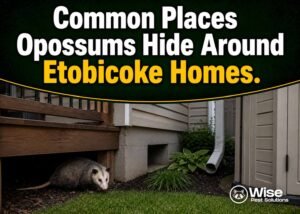
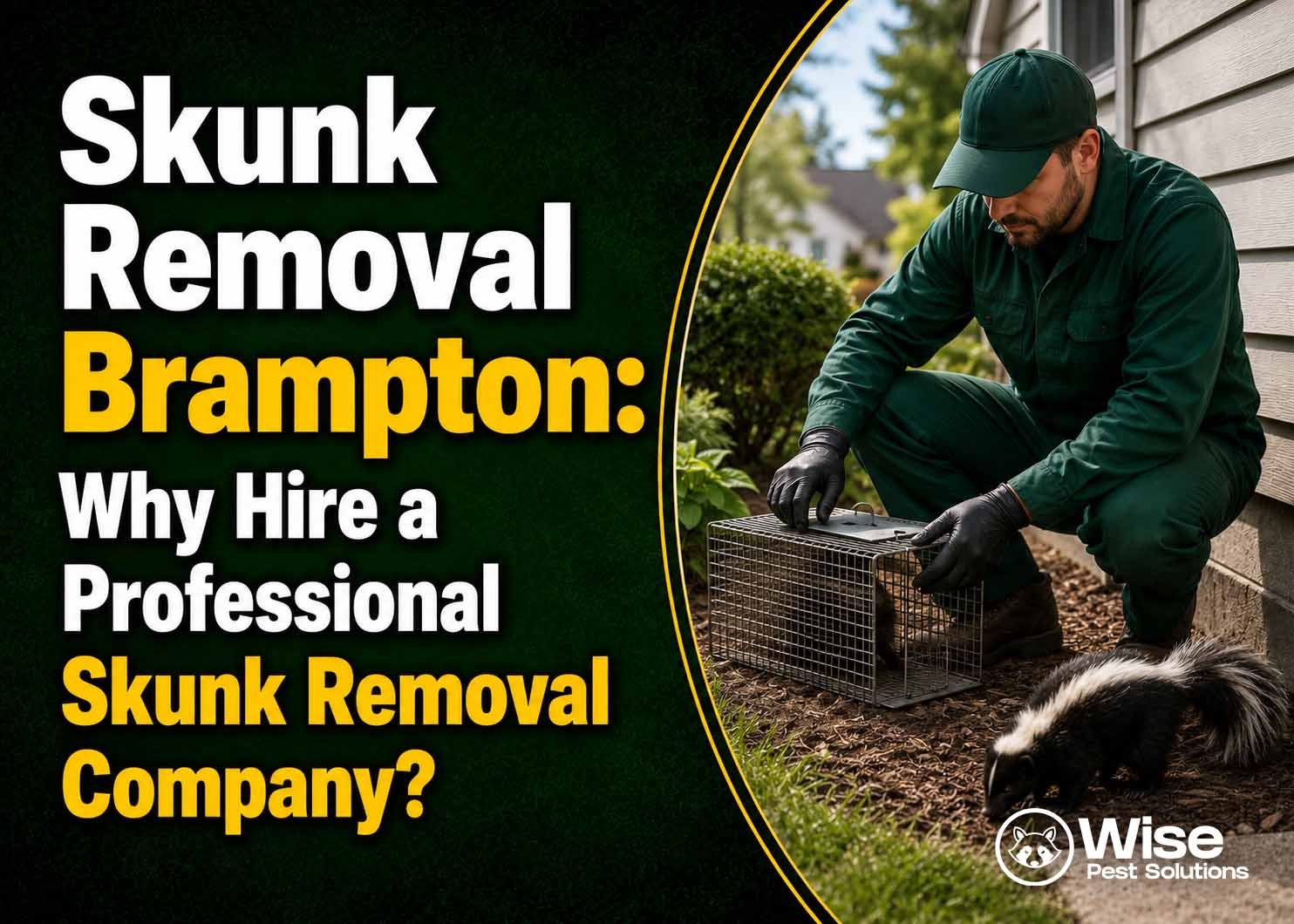
A strong skunk smell around the house does not always mean an animal sprayed on the property. A skunk may be living below the deck, porch, shed, steps, or another outdoor structure.
Other signs can be easier to miss. Small holes appear across the lawn. Garbage is disturbed overnight. A pet keeps reacting to one corner of the yard. Soil near the deck looks freshly moved.
Professional skunk removal services Brampton property owners hire should do more than move one animal. The service needs to identify the den, check for young, remove the skunk carefully, secure the area, and reduce the conditions attracting wildlife.
TL;DR: Professional skunk removal reduces the risk of spraying, injury, trapped young, and repeat denning. A qualified company inspects the property, chooses a humane removal method, confirms the den is empty, installs exclusion materials, and provides practical prevention advice.
Objective
This guide explains why professional skunk removal is safer than DIY trapping, how humane removal works, what the service should include, how costs are calculated, and how Brampton property owners can prevent skunks from returning.
Key Takeaways
- Skunks commonly shelter below decks, sheds, porches, steps, and garages.
- Blocking a den without checking it can trap an adult or dependent young.
- Cornering or frightening a skunk increases the chance of spraying.
- Long-distance relocation is not permitted under Ontario wildlife rules.
- Humane removal should include inspection, exclusion, repairs, and prevention.
- Garbage, pet food, grubs, fallen fruit, and open spaces below structures attract skunks.
- Brampton Animal Services does not remove wildlife from private homes.
Table of Contents
- Why Skunks Enter Brampton Properties
- Signs a Skunk May Be Living on Your Property
- Why DIY Skunk Removal Creates Problems
- How Professional Skunk Removal Works
- Humane Removal Versus Trapping and Relocation
- Benefits of Hiring a Professional Skunk Removal Company
- How to Choose a Skunk Removal Service
- Skunk Removal Costs and Prevention
- Frequently Asked Questions
Why Skunks Enter Brampton Properties
Skunks enter residential areas while looking for food, water, and protected shelter. They are mainly active from evening through the night, which is why homeowners often notice the signs before seeing the animal.
A low deck can provide a dry den. An opening below a shed offers protection from weather and predators. Garbage, pet food, fallen fruit, insects, and lawn grubs provide easy meals.
Common skunk attractants include:
- Open garbage or compost bins
- Pet food left outdoors
- Birdseed below feeders
- Fallen fruit and vegetables
- Barbecue grease
- Lawn grubs and insects
- Standing water
- Open spaces below decks
- Gaps below sheds and porches
- Outdoor clutter and brush piles
Wise Pest Solutions notes that Brampton properties can attract skunks when they provide both food and shelter. The company commonly checks decks, sheds, porches, garages, crawl spaces, gardens, and garbage areas during skunk inspections.
Skunks are not usually looking for conflict. A healthy animal will generally move away when it has a clear escape route. Problems arise when the skunk is surprised, cornered by a person or dog, or blocked inside its den.
Signs You Need Skunk Removal Services Brampton
A skunk crossing the yard once may simply be moving through the neighbourhood. Repeated activity near the same part of the property can indicate a feeding site or den.
A Strong Odour Around One Structure
A persistent smell near a deck, shed, porch, garage, or crawl space may indicate that a skunk is sheltering nearby.
The smell can also enter a house through windows, vents, foundation openings, and air-intake systems. Closing the windows may reduce the immediate odour, but it does not address the source.
Digging Across the Lawn
Skunks dig small holes while searching for insects and grubs.
The holes are often shallow and spread across several parts of the lawn. Larger disturbed areas may appear where the animal finds a reliable food source.
Lawn damage alone does not confirm a skunk. Raccoons and other wildlife can also disturb grass and soil. Tracks, camera footage, odour, and nighttime activity provide stronger evidence.
Activity Below a Deck or Shed
Fresh soil, tracks, droppings, or a clear pathway leading below a structure can point to an active den.
Do not crawl under the structure or shine a bright light directly into the opening. The animal may feel trapped and spray.
Pets Reacting to One Area
Dogs often detect a skunk before people do. A pet may bark, pull toward a deck, or repeatedly investigate the same section of the yard.
Keep pets away from the suspected den. A close encounter can result in spraying, scratches, or bites.
Nighttime Camera Activity
A doorbell camera or outdoor security camera may show the skunk entering and leaving the same opening.
Video can help a professional identify the species, direction of travel, activity times, and possible den location.
Wise Pest Solutions recommends arranging an inspection when homeowners notice strong odours, repeated digging, nighttime movement, or activity below a porch, deck, shed, garage, or crawl space.
Why DIY Skunk Control Brampton Can Create a Bigger Problem
Many homeowners try to solve skunk activity by blocking the opening, placing a trap, or using strong-smelling repellents.
These steps can fail when the den has not been inspected.
Blocking the Den Too Early
A skunk may be resting below the structure when the opening is sealed. Young may also be hidden inside while the mother is outside searching for food.
A trapped animal may dig around the barrier, damage another part of the structure, or spray repeatedly.
The opening should only be closed after the technician confirms that the den is empty.
Separating a Mother From Her Young
Skunk kits depend on their mother during their early development. Removing the adult without finding the young can leave them trapped below a deck or shed.
This can lead to animal distress, odour, noise, and further property damage as the mother tries to return.
Toronto Wildlife Centre warns that one-way doors used at the wrong time can exclude a mother while leaving young inside. The organization advises careful seasonal assessment before any exclusion device is installed.
Increasing the Risk of Spraying
A person approaching with a trap, broom, hose, or other object may make the skunk feel cornered.
The same risk applies to pets. Dogs often move quickly toward unfamiliar animals, giving the skunk little time to escape.
A professional plans the work around the animal’s movement and keeps clear escape routes wherever possible.
Using an Unsuitable Trap
A trap placed without understanding the den location may catch the wrong animal. It may also leave a captured skunk exposed to heat, cold, pets, or people.
Wildlife traps must be monitored and managed according to applicable provincial and municipal requirements.
Moving the Problem Elsewhere
Capturing one skunk does not change the conditions that attracted it. Another animal may use the same opening if the food and shelter remain available.
Ontario states that relocated wildlife must be released within one kilometre of where it was captured and within 24 hours. The province also notes that relocation may not solve the problem when the original attractants remain.
How Professional Skunk Removal Brampton Services Work
Professional removal begins with evidence, not assumptions.
Wise Pest Solutions describes its professional skunk removal service as a process involving inspection, activity assessment, humane removal, entry-point review, exclusion guidance, and prevention advice.
1. Inspecting the Property
The technician checks the location where activity has been reported and looks for other possible access points.
The inspection may cover:
- Decks and porches
- Sheds and garages
- Exterior stairs
- Crawl spaces
- Foundation openings
- Garden structures
- Garbage storage areas
- Fences and travel routes
- Lawn damage
- Pet feeding areas
Tracks, soil movement, droppings, hair, camera footage, and odour can help confirm skunk activity.
2. Identifying the Active Den
A property may have several gaps below outdoor structures, but only one may be active.
The technician checks which opening the skunk is using and whether there is evidence of more than one animal.
This prevents unnecessary repairs and reduces the chance of closing the wrong area.
3. Checking for Dependent Young
The season, den size, movement pattern, and sounds inside the space can indicate that young may be present.
A professional should never assume that one visible adult is the only animal on the property.
The removal plan may need to include careful removal and reunification of the family.
4. Choosing a Humane Removal Method
The correct method depends on the den, season, property layout, and condition of the animal.
Options may include:
- Allowing a temporary visitor to leave
- Controlled harassment using safe deterrents
- A monitored one-way exit when appropriate
- Manual removal from an enclosed space
- Family reunification
- Humane trapping when necessary and permitted
- Referral for injured or distressed wildlife
No single method is suitable for every skunk problem.
5. Confirming the Den Is Empty
The technician may use camera monitoring, tracks, visual checks, or a temporary test over the entrance.
Permanent repairs should not begin until there is reasonable evidence that all animals have left.
6. Installing Exclusion Materials
After removal, the company secures the area so skunks cannot return through the same opening.
Exclusion work may include:
- Heavy wildlife-resistant screening
- Buried mesh around decks
- Reinforced shed skirting
- Crawl-space repairs
- Garage gap correction
- Foundation protection
- Repairs around steps or porches
Toronto Wildlife Centre recommends installing buried L-shaped mesh around decks or sheds, but only after confirming that wildlife has left the space.
7. Addressing Odour and Contamination
A den may contain droppings, urine, nesting material, food debris, and skunk scent.
The technician should explain which areas require cleanup and whether contaminated soil, insulation, or stored material needs to be removed.
Odour treatment should happen after the source has been controlled. Masking the smell while an active skunk remains below the structure will not solve the problem.
8. Providing Prevention Advice
The final step is reducing food and shelter around the property.
Wise Pest Solutions includes cleanup, entry-point sealing, prevention guidance, and follow-up within its wider wildlife removal services.
Humane Skunk Removal Brampton Versus Trapping and Relocation
Humane removal is often misunderstood as trapping an animal and releasing it far away.
Long-distance relocation can separate an animal from its known food sources, shelter, den sites, and territory. It can also leave dependent young behind.
| Trapping Alone | Humane Removal and Exclusion |
| Focuses on capturing one animal | Assesses the complete property |
| May miss dependent young | Checks for family activity |
| Does not repair the den opening | Secures the access point |
| Can catch another species | Begins with species identification |
| May increase spray risk | Plans movement carefully |
| Leaves attractants in place | Addresses food and shelter |
| Another skunk may move in | Reduces repeat access |
| Relocation rules may be overlooked | Follows local and provincial requirements |
A humane plan keeps removal, exclusion, and prevention connected.
Trapping may still be needed in certain cases, but the company should explain why it is being used, how the trap will be monitored, and what will happen after capture.
Benefits of Hiring a Professional Skunk Removal Company
Hiring a professional provides more than convenience.
Lower Risk of Being Sprayed
A technician understands skunk warning behaviour and avoids forcing the animal into a corner.
Careful movement and properly placed equipment reduce unnecessary stress.
Correct Identification
A hole below a shed may be used by a skunk, raccoon, opossum, groundhog, or another animal.
Correct identification protects the animal and prevents the wrong removal method from being used.
Protection for Young Animals
A professional removal plan considers breeding and denning seasons.
This reduces the risk of leaving dependent young behind or separating a family.
Long-Term Property Protection
Removal without exclusion is incomplete.
A professional skunk removal Brampton service should help stop the same space from becoming another den.
Reduced Damage
Early removal can limit digging, damaged skirting, contaminated spaces, and odour problems.
The technician can also identify weak areas before wildlife makes them larger.
Legal Compliance
Wildlife handling and relocation must follow Ontario requirements and local rules.
A professional company should understand how these rules apply to capture, transport, release, and humane treatment.
Clear Follow-Up
The company can check whether activity has stopped and whether exclusion materials remain secure.
Wise Pest Solutions states that its wildlife process includes follow-up visits when needed to confirm that animals have not returned.
How to Choose a Wildlife Removal Brampton Company
Brampton Animal Services does not remove wildlife from private homes. The City may provide an assessment or advice, but property owners need to contact a wildlife removal company for animals living inside or below a structure.
Ask the following questions before hiring a provider.
Does the Service Start With an Inspection?
The company should identify the animal, den, entry point, secondary gaps, and possible young before recommending a method.
Which Removal Method Will Be Used?
Ask whether the plan involves controlled exclusion, trapping, manual removal, or family reunification.
The provider should explain why the method suits the property.
How Will You Check for Young?
Avoid companies that install a one-way door or close an opening without checking the den.
Is Exclusion Included?
Confirm whether the quote includes buried screening, skirting repairs, foundation protection, or other entry-point work.
Will the Company Handle Cleanup?
Ask whether droppings, nesting material, contaminated soil, and odour treatment are included or priced separately.
Are Follow-Up Visits Included?
The provider should explain how it will confirm that removal has worked and what happens if activity returns.
Is Pricing Provided in Writing?
The quote should separate inspection, removal, trapping, exclusion, cleanup, materials, and follow-up charges.
Wise Pest Solutions provides wildlife removal in Brampton for homes, rental properties, commercial sites, yards, garages, decks, sheds, and other outdoor structures.
What Does Skunk Control Brampton Cost?
There is no single price for every skunk problem.
A visible skunk trapped in an open garage may require less work than a family living below a large deck with several possible entrances.
Cost factors include:
- Inspection requirements
- Number of animals
- Den location
- Presence of young
- Access below the structure
- Need for trapping
- Size of the exclusion area
- Materials required
- Soil and lawn conditions
- Cleanup and odour treatment
- Structural repairs
- Follow-up visits
- Emergency service needs
Ask for a written quote before authorizing the work.
A low removal price may not include exclusion. That can leave the property open to another skunk and create a second service cost later.
How to Prevent Skunks From Returning
Skunk prevention focuses on food and shelter.
Use these practical steps:
- Keep garbage and compost bins tightly closed.
- Do not leave pet food outdoors overnight.
- Clean barbecue grease and food spills.
- Pick up fallen fruit and vegetables.
- Remove birdseed from the ground.
- Repair leaking outdoor taps.
- Reduce brush piles and yard clutter.
- Inspect gaps below decks and sheds.
- Install buried wildlife-resistant screening.
- Repair damaged garage-door seals.
- Manage lawn grub problems appropriately.
- Keep pets away from known wildlife routes.
- Check exclusion materials after winter or construction work.
Do not seal a suspected den until the area has been inspected and confirmed empty.
Frequently Asked Questions
Will a skunk leave on its own?
A skunk may leave if it is only passing through or using a space temporarily. Regular entry below the same deck, porch, or shed may indicate an established den that requires inspection.
Should I block the opening below my deck?
Not until you know the den is empty. Blocking an active opening can trap a skunk or separate a mother from her young.
Can a professional remove a skunk without making it spray?
No company can guarantee that a wild skunk will never spray. Careful handling, controlled movement, and avoiding direct confrontation can reduce the risk.
Is skunk trapping legal in Brampton?
Most wildlife causing property damage may be captured under Ontario rules, but conditions apply. Live wildlife must generally be released within one kilometre, released within 24 hours, treated humanely, and handled in line with municipal and provincial requirements.
Does Brampton Animal Services remove skunks from homes?
No. Brampton Animal Services may assess a wildlife conflict or provide advice, but it does not remove wildlife from private homes. Property owners need to contact a wildlife removal company.
What should I do if my dog is sprayed?
Move the dog away from the skunk and avoid bringing it directly onto carpets or furniture. Keep the animal’s face away from your own, wear gloves, and contact a veterinarian if spray reaches the eyes or the pet shows breathing problems or unusual distress.
How can I tell if there are baby skunks below the shed?
Young skunks may produce soft movement or vocal sounds, but they are not always easy to detect. A professional should assess the den before exclusion or trapping begins.
Schedule Professional Skunk Removal in Brampton
A skunk below a deck or shed should be handled before a pet encounter, repeated spraying, lawn damage, or a larger contamination problem occurs.
The safest service combines inspection, humane removal, family protection, exclusion, cleanup guidance, and prevention.
For skunk removal services Brampton homeowners, landlords, property managers, and businesses can arrange, contact Wise Pest Solutions to request an inspection and quote. The team provides practical, humane skunk control across Brampton and nearby GTA communities.