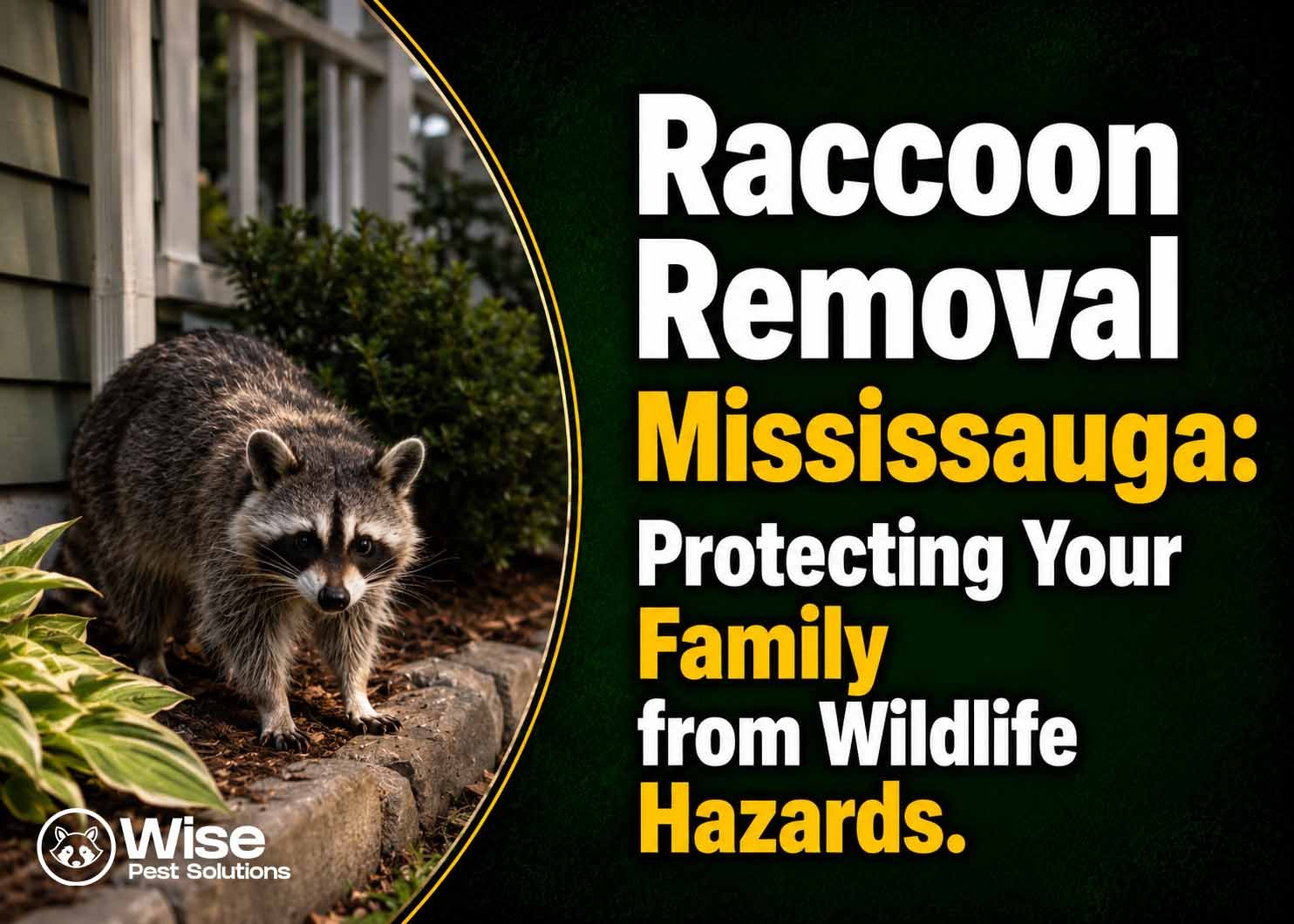
Heavy footsteps above the bedroom are hard to ignore. The sound may stop before morning, but damaged insulation, droppings, torn soffits, and nesting material can remain inside the attic.
Raccoons also enter garages, chimneys, crawl spaces, sheds, and areas below decks. Once they find a protected nesting location, they may continue returning until the entry point is identified and secured.
Professional raccoon removal services Mississauga homeowners use should protect both the family and the animal. The process needs to include inspection, humane removal, a check for dependent young, entry-point control, cleanup guidance, and prevention.
TL;DR: Never approach, trap, or block a raccoon inside an attic or other structure. Professional removal identifies the active entrance, checks for young, removes the animals humanely, repairs access points, and addresses waste or nesting damage that may affect your family and pets.
Objective
This guide explains the hazards connected with raccoons, the signs of an indoor den, how professional removal works, what a complete service should include, and how Mississauga property owners can reduce future activity.
Key Takeaways
- Loud nighttime movement can indicate a raccoon in an attic, ceiling, garage, or wall space.
- Do not close an entry hole until the property has been checked for an adult and dependent young.
- Raccoon waste should not be swept or handled without suitable precautions.
- Removal without exclusion leaves the property open to another wildlife problem.
- Humane removal focuses on controlled exit, family reunification, repairs, and prevention.
- Garbage, pet food, roof access, damaged soffits, and open chimneys can attract raccoons.
- Sick, injured, aggressive, or distressed raccoons should be reported to Mississauga Animal Services.
Table of Contents
- Why Raccoons Enter Mississauga Properties
- Wildlife Hazards Raccoons Can Create
- Signs You Need Raccoon Removal
- How Professional Raccoon Removal Works
- Why DIY Raccoon Control Can Fail
- How to Choose a Raccoon Removal Company
- Removal Costs and Prevention
- Frequently Asked Questions
Why Raccoons Enter Mississauga Properties
Raccoons look for accessible food and sheltered places where they can rest or raise young. An attic provides a dark, quiet space away from weather and outdoor threats.
Wise Pest Solutions identifies damaged soffits, roof gaps, loose vents, open chimneys, garbage, pet food, branches near the roof, and protected spaces below decks or sheds as common reasons raccoons move onto a property.
Common raccoon attractants include:
- Garbage bins with loose lids
- Food waste beside the house
- Pet food left outdoors
- Birdseed below feeders
- Fallen fruit
- Barbecue grease
- Open compost
- Damaged roof vents
- Unprotected chimneys
- Loose soffits and fascia
- Tree branches touching the roof
- Open areas below decks and sheds
One raccoon crossing the yard does not always mean the property has an infestation. Repeated visits to the same roof edge, deck, garage, or garbage area are more concerning.
Raccoons that find a safe entrance may return to it. Another animal may also use the opening later if the damaged area is not repaired. Wise Pest Solutions places entry-point identification and prevention guidance within its current raccoon removal process.
Wildlife Hazards Raccoons Can Create Around a Home
Raccoons should be treated as wild animals, even when they appear calm. The City of Mississauga advises residents not to approach, feed, or touch them because they can carry diseases and parasites that affect people and pets.
Bites and Scratches
A raccoon may defend itself if it feels trapped, threatened, or separated from its young. Children and pets face greater risk when they approach an animal below a deck, inside a garage, or beside a garbage area.
Never try to pick up, corner, or chase a raccoon.
If a raccoon bites or scratches someone, wash the area thoroughly with soap and water and seek medical advice immediately. Peel Public Health also asks residents to report animal bites or scratches because quick assessment can help prevent rabies after a possible exposure.
Raccoon Droppings
Raccoons may repeatedly leave droppings in the same area. These locations are often called latrines.
The CDC states that raccoon latrines may be found in unsealed attics, at the bases of trees, and on flat areas such as decks and rooftops. Some raccoon feces can contain roundworm eggs, which may infect people if contaminated soil, water, or objects are accidentally swallowed.
Children require extra protection because they may touch contaminated soil or objects and then place their fingers near their mouths.
Do not dry sweep or casually vacuum a large area of raccoon waste. Confined attics, insulation, and repeated latrine sites may need professional cleanup and disposal.
Damage to the Building
Raccoons can pull at weak vents, soffits, shingles, fascia, screens, and other exterior materials while trying to enter.
Inside an attic, movement and nesting activity may disturb insulation, stored belongings, ducts, and other materials. Waste can also create staining and strong odours. Wise Pest Solutions lists roof damage, droppings, nesting material, noise, and odour among the main signs of a raccoon problem.
Risks to Pets
Dogs may chase or corner a raccoon in the yard. Cats may encounter one near a deck, shed, or garbage area.
Keep pets indoors when a raccoon is repeatedly visiting the property. Vaccinations should remain current, and food or water bowls should not be left outside overnight.
Signs You Need Raccoon Removal Services Mississauga
Raccoons are larger than squirrels, mice, and rats, so their movement often produces heavier sounds.
Loud Nighttime Noise
Homeowners may hear thumping, dragging, scratching, or walking above the ceiling.
The noise may be strongest after dark, when raccoons commonly leave the den to search for food. Daytime activity does not automatically mean the animal is sick. A mother may also leave during the day when feeding young.
Damage Around the Roof
Look for:
- Bent roof vents
- Torn soffits
- Loose fascia
- Disturbed shingles
- Open chimney caps
- Scratch marks
- Insulation near an exterior opening
Do not climb onto the roof to inspect an active entrance. A raccoon may be close to the opening, and damaged roof areas can create a fall hazard.
Droppings or Strong Odour
Waste and nesting material may produce a smell near the attic hatch, ceiling, roofline, garage, or wall.
Odour can also come from a dead animal, urine, wet insulation, or another wildlife species. An inspection is needed before the source can be confirmed.
Repeated Garbage Problems
Overturned bins and torn garbage bags often show that wildlife has found a regular food source.
Secure the garbage first, but also inspect nearby rooflines, decks, sheds, and garages if the activity continues.
Tracks and Claw Marks
Raccoon tracks resemble small handprints. Marks may appear in soft soil, snow, dust, mud, or near garbage containers.
Camera footage can also help confirm the species and show where the animal enters or leaves.
Wise Pest Solutions provides raccoon removal in Mississauga for houses, condos, rental properties, commercial buildings, detached garages, attics, decks, rooflines, and other affected areas.
How Professional Raccoon Removal Mississauga Services Work
Professional removal should begin with an inspection. The technician needs to understand how many animals may be present, where they are entering, and which parts of the property have been affected.
1. Inspecting the Exterior and Interior
The inspection may include:
- Roof edges
- Attics
- Soffits and fascia
- Roof vents
- Chimneys
- Garages
- Sheds
- Crawl spaces
- Decks and porches
- Trees beside the roof
- Garbage storage areas
- Secondary exterior gaps
Wise Pest Solutions states that its inspection process covers the roofline, attic, exterior openings, decks, garages, soffits, vents, and surrounding areas.
2. Finding the Active Entrance
A roof may contain several damaged areas, but the technician must identify which opening the raccoon is using.
Tracks, hair, grease marks, droppings, damaged materials, noise, and camera footage can help confirm the active route.
Secondary gaps should also be identified. Closing only one opening may cause the raccoon to use another weak area.
3. Checking for Young Raccoons
A female may build a den inside an attic, chimney, garage, shed, or other protected space while raising young.
Closing the entrance or installing a one-way device without checking the den can separate the family. The mother may damage the building while trying to return.
Mississauga Animal Services advises residents to choose wildlife removal companies that use humane methods and can reunite mothers with their young.
4. Selecting a Humane Removal Method
The correct method depends on the den location, season, building condition, and presence of young.
A plan may include:
- Allowing a temporary visitor to leave
- Controlled one-way exclusion
- Manual removal from an accessible interior area
- Removal and reunification of young
- Humane trapping when required and legally managed
- Referral for injured or orphaned wildlife
Humane raccoon removal Mississauga services should avoid unnecessary stress and reduce the chance of leaving an animal inside the building.
5. Confirming the Animals Have Left
The technician may use visual checks, cameras, tracks, temporary seals, or monitored exclusion devices.
Permanent repairs should only begin when the affected space has been checked and there is no remaining activity.
6. Securing Entry Points
Raccoons may pull apart light screens or return through weak repairs.
Exclusion work may include:
- Wildlife-resistant vent covers
- Chimney caps
- Soffit repair
- Roof-edge reinforcement
- Gap sealing
- Garage repairs
- Crawl-space protection
- Screening below decks or sheds
Wise Pest Solutions includes entry-point identification, exclusion recommendations, prevention guidance, and follow-up support within its listed raccoon service.
7. Cleaning the Affected Area
An attic or den may contain droppings, urine, nesting debris, damaged insulation, and strong odours.
The cleanup scope depends on the amount of contamination. Some properties need waste removal and surface sanitation. Others may require affected insulation to be removed and replaced.
Cleanup should happen after the animals are gone and the entrance has been secured.
Why DIY Raccoon Control Mississauga Can Fail
A homeowner may see a damaged roof vent and cover it the same afternoon. That repair can trap the raccoon inside.
The animal may then tear through another section of the roof, move deeper into the attic, or enter an occupied part of the home.
Common DIY mistakes include:
- Blocking the main entrance too early
- Missing dependent young
- Working on a roof without suitable equipment
- Using an unmonitored trap
- Approaching a cornered animal
- Handling droppings without protection
- Repairing only one access point
- Leaving garbage and pet food available
- Using smoke or harmful substances in a chimney
- Relocating wildlife without understanding the rules
The City of Mississauga does not trap or relocate healthy raccoons from their home territory. It recommends contacting a wildlife removal company when humane steps do not resolve an animal living on private property.
Ontario also limits how nuisance wildlife may be captured, handled, and relocated. A professional should understand the rules that apply to the property and chosen method.
How to Choose a Professional Raccoon Removal Mississauga Company
Ask the company to explain its plan before approving the work.
Does the Service Include a Full Inspection?
The technician should inspect more than the hole reported by the homeowner.
A complete inspection looks for the den, secondary openings, damage, droppings, attractants, and signs of young.
How Will the Raccoons Be Removed?
The company should explain whether it will use exclusion, manual removal, reunification, trapping, or another method.
Avoid a provider that recommends the same method before inspecting the property.
How Are Young Raccoons Handled?
Ask how the company checks for young and reunites them with the mother.
This is one of the most important questions during denning season.
Are Entry-Point Repairs Included?
Some quotes include basic exclusion. Others price roof, soffit, vent, chimney, or deck repairs separately.
Request a written explanation of the materials and areas covered.
Does the Quote Include Cleanup?
Removal and attic cleanup may be separate services.
Ask whether the company will remove droppings, nesting material, contaminated insulation, or odour sources.
Is Follow-Up Included?
The company should explain how it confirms that activity has stopped and what happens if noise or damage returns.
Wise Pest Solutions describes its approach as inspection, activity assessment, humane removal, entry-point identification, prevention guidance, clear communication, and follow-up where needed.
Raccoon Removal Costs and Long-Term Prevention
The cost of raccoon control Mississauga services depends on the property and the work required.
Main price factors include:
- Den location
- Roof height
- Number of active openings
- Number of animals
- Presence of young
- Type of removal method
- Damage to vents or soffits
- Size of the exclusion area
- Attic contamination
- Insulation removal
- Odour treatment
- Follow-up visits
- Emergency access needs
A raccoon trapped in an open garage may require less work than a family living inside a high attic with several damaged vents.
Ask for a written quote that separates inspection, removal, exclusion, cleanup, materials, repairs, and follow-up. The cheapest starting price may not include the work required to prevent another entry.
Ways to Prevent Raccoons From Returning
Take these practical steps:
- Keep garbage and compost bins tightly closed.
- Place garbage outside close to collection time.
- Do not leave pet food outdoors.
- Clean barbecue grease and food spills.
- Pick up fallen fruit.
- Trim branches that touch or hang close to the roof.
- Install secure chimney caps.
- Protect roof vents with suitable covers.
- Repair loose soffits and fascia.
- Close spaces below decks and sheds after confirming they are empty.
- Keep garage doors closed.
- Inspect the roof after storms or exterior work.
- Remove clutter that provides shelter.
- Keep pets away from known raccoon routes.
Wise Pest Solutions recommends controlling garbage and pet food, trimming roof access, repairing soffits and openings, securing vents and chimneys, reducing clutter, and inspecting roof areas regularly.
Frequently Asked Questions
Should I block a raccoon’s attic entrance?
No. An adult or dependent young may still be inside. The den should be inspected and cleared before the opening is permanently repaired.
Will a raccoon leave the attic on its own?
Some raccoons may move after temporary deterrents are used, but an established den or family may remain. Mississauga suggests humane deterrents for several days and contacting a wildlife company if the animals do not leave.
Are raccoon droppings dangerous?
Raccoon feces can contain parasites, including roundworm eggs. Avoid direct contact and keep children and pets away from contaminated areas. Large attic deposits or repeated latrine sites may require professional cleanup.
What should I do if a raccoon bites or scratches someone?
Wash the wound thoroughly with soap and water and seek medical care immediately. Report the incident to Peel Public Health. Call Mississauga Animal Services if a wild animal bites a person or pet, and call 911 when an attack creates an immediate threat or serious injury.
Does Mississauga Animal Services remove healthy raccoons?
No. Animal Services does not trap or relocate healthy raccoons from private property. It responds to sick, injured, orphaned, aggressive, or distressed animals.
Who should I call if a raccoon appears sick?
Do not approach it. Signs of illness or injury may include staggering, falling, paralysis, discharge around the eyes or nose, unusual tameness, or lying on the ground. Contact Mississauga Animal Services at 905-896-5858.
Can raccoons return after removal?
Yes. Raccoons or other wildlife may use the property again if roof gaps, vents, chimneys, garbage, pet food, or shelter remain accessible. Removal should be followed by exclusion and prevention.
A raccoon inside an attic, garage, chimney, or crawl space can create more than nighttime noise. Delayed removal may lead to wider property damage, waste contamination, stronger odours, and closer contact with children or pets.
For professional raccoon removal Mississauga homeowners, landlords, property managers, and businesses can arrange, review the Wise Pest Solutions raccoon removal service or contact Wise Pest Solutions to request an inspection and quote. The service focuses on humane removal, entry-point identification, prevention guidance, and long-term property protection.