
Bed bugs can enter a Toronto home through luggage, clothing, used furniture, backpacks, or items moved between shared living spaces. Once inside, they hide close to beds, sofas, and other areas where people remain still for long periods.
Many property owners want treatment that controls the infestation without unnecessary pesticide use. Eco-friendly bed bug removal Toronto services meet this need by combining detailed inspection, physical removal methods, heat, steam, monitoring, and carefully targeted products where required.
The goal is not simply to spray the room. It is to remove active bed bugs, deal with hidden areas, reduce exposure risks, and confirm that the treatment has worked.
TL;DR: Eco-friendly bed bug treatment uses inspection, vacuuming, steam, heat, laundering, encasements, monitoring, and limited targeted products as part of one control plan. The best method depends on the infestation, property type, furniture, occupants, and how far the bed bugs have spread.
Objective
This guide explains what eco-friendly bed bug treatment means, which low-chemical and non-chemical methods are available, how professional treatment works, and what Toronto property owners should ask before booking a service.
Key Takeaways
- Eco-friendly treatment does not always mean completely chemical-free treatment.
- Steam, heat, vacuuming, laundering, and monitoring can reduce pesticide use.
- No single method works for every bed bug infestation.
- Bed bugs and their eggs can hide in furniture joints, baseboards, cracks, and fabric seams.
- Moving furniture between rooms can spread the infestation.
- Professional treatment should include preparation instructions and follow-up monitoring.
- Products used in Canada must be registered and applied according to their labels.
Table of Contents
- What Eco-Friendly Bed Bug Treatment Means
- Signs You May Have Bed Bugs
- Eco-Friendly Bed Bug Treatment Options
- How Professional Bed Bug Treatment Works
- Eco-Friendly Treatment Versus Standard Spraying
- How to Choose a Bed Bug Exterminator in Toronto
- Treatment Costs and Preparation
- How to Prevent Bed Bugs From Returning
- Frequently Asked Questions
What Does Eco-Friendly Bed Bug Treatment Toronto Mean?
Eco-friendly treatment is a control approach that reduces unnecessary pesticide use while still addressing the infestation properly.
It does not mean using an untested natural spray or applying essential oils around the room. A product described as natural is not automatically effective, safe, or approved for bed bug control.
A responsible treatment plan may combine:
- Detailed inspection
- Vacuuming
- Steam application
- Controlled heat
- Hot washing and drying
- Mattress encasements
- Bed bug interceptors
- Clutter reduction
- Crack and gap management
- Targeted use of registered products
- Follow-up monitoring
This approach is often called Integrated Pest Management, or IPM. It combines physical control, prevention, monitoring, and carefully selected treatments instead of relying on one product.
Health Canada states that bed bug control works best when physical methods and preventive measures are used together with any selected treatment. Available professional tools include steam, heat, insecticidal dusts, liquid products, aerosols, and other approved methods.
Wise Pest Solutions follows a similar approach in its guide to bed bug prevention and control. The company describes its process as inspection, customized treatment, low-risk methods, monitoring, follow-up visits, and prevention advice.
Signs You May Need Bed Bug Removal Toronto Services
Itchy skin alone does not confirm a bed bug infestation. Mosquitoes, fleas, allergic reactions, and other conditions can cause similar marks.
Look for physical evidence around places where people sleep or rest.
Live Bed Bugs
Adult bed bugs are flat, oval insects with a reddish-brown appearance. They are often found along mattress seams, behind headboards, inside box springs, or in furniture joints.
Young bed bugs are smaller and may be harder to see.
Dark Spots Near the Bed
Small dark marks may appear along mattress seams, bedding, baseboards, bed frames, or nearby furniture.
Check protected corners and narrow gaps rather than looking only at the open surface of the mattress.
Shed Skins
Bed bugs shed their outer covering as they develop. Pale or light-brown shells near a sleeping area can point to an active or established infestation.
Small Eggs
Bed bug eggs can be attached inside furniture joints, cracks, fabric seams, and other protected locations. Their size and placement make them easy to miss during a quick inspection.
Blood Marks on Bedding
Small reddish marks may appear if a recently fed bed bug is crushed during sleep.
One mark is not enough to confirm the problem. Several signs found together provide stronger evidence.
Activity in More Than One Room
Bed bugs may begin near one bed and spread through moved belongings, furniture, clothing, baseboards, or shared building spaces.
Toronto apartments, condos, hotels, furnished rentals, shelters, and multi-unit buildings often require a wider inspection because activity may not be limited to one room.
Eco-Friendly Bed Bug Treatment Options
A treatment plan should match the property and infestation. Some methods work well on fabrics, while others are better suited to cracks, furniture, or complete rooms.
1. Steam Treatment
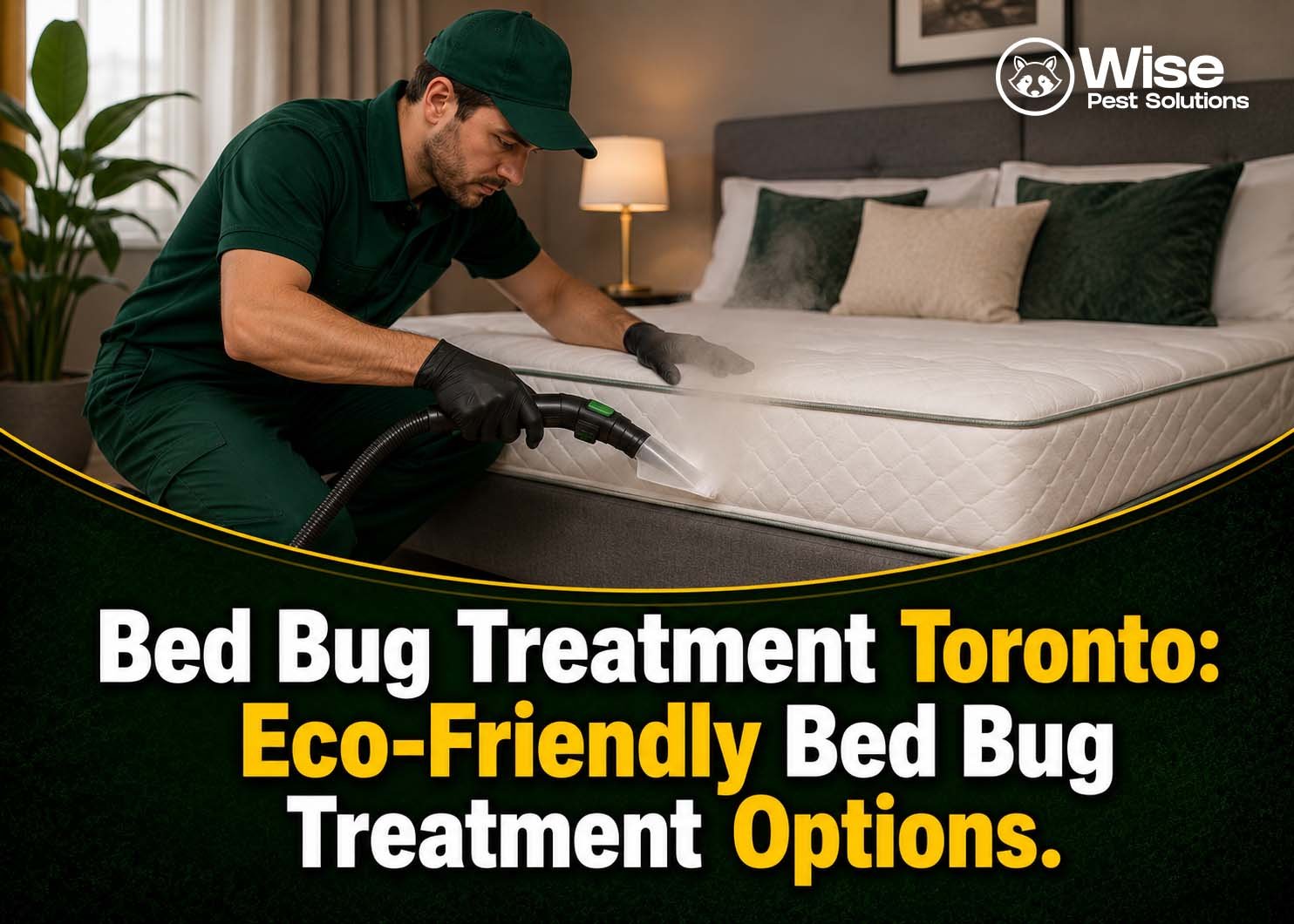
Steam can kill bed bugs that receive direct exposure. It may be used along mattress seams, furniture joints, baseboards, carpet edges, bed frames, and other surfaces that tolerate heat and moisture.
The steam must be applied slowly enough to reach the target area. Moving the equipment too quickly may leave hidden bugs alive.
Health Canada states that bed bugs die at 50°C and that steam cleaners generally release steam at temperatures of at least 100°C. Steam only kills insects it reaches, so technique and access matter.
Steam has several practical benefits:
- It leaves little or no pesticide residue.
- It can be used on selected mattresses and furniture.
- It reaches seams and narrow surface gaps.
- It can kill several life stages on contact.
Steam is not a complete treatment by itself. Deep wall voids, hidden furniture spaces, and untreated belongings may still contain activity.
2. Professional Heat Treatment
Heat treatment raises the temperature of a room or treatment area to a level bed bugs cannot survive.
The process requires professional equipment and monitoring. Furniture placement, room layout, insulation, airflow, and cold spots can affect the result.
Items that may be damaged by heat must be identified and removed according to the technician’s instructions. These can include certain electronics, medications, pressurized containers, artwork, and heat-sensitive materials.
Health Canada advises leaving structural heat treatment to trained professionals.
Heat can be useful because it:
- Treats many accessible areas at the same time.
- Reaches bugs hidden inside suitable furniture and belongings.
- Reduces reliance on residual products.
- Can kill bed bugs at different life stages when correct temperatures are maintained.
Heat treatment still requires preparation and monitoring. Bed bugs may survive if belongings are packed too tightly or parts of the room fail to reach the required temperature.
3. Careful Vacuuming
Vacuuming physically removes accessible bed bugs, eggs, shed skins, and debris.
A technician may vacuum:
- Mattress and box-spring seams
- Bed-frame joints
- Upholstered furniture
- Carpet edges
- Baseboards
- Cracks and crevices
- Floor areas below beds
- Furniture surfaces
The vacuum must be handled carefully after use. Contents should be sealed and removed so captured bed bugs cannot escape back into the property.
Health Canada recommends using suitable attachments to scrape and vacuum seams and surfaces because bed bugs cling to wood and fabric, while their eggs remain attached to the surfaces where they were laid.
Vacuuming lowers the number of bugs but does not provide lasting control on its own.
4. Hot Washing and Drying
Bedding, clothing, curtains, and washable fabrics may be treated through laundering and high-temperature drying.
Clean items should be placed in sealed bags or containers after processing. Leaving them open in the treatment area can allow bed bugs to enter them again.
Health Canada recommends washing suitable items in hot water and using the hottest dryer setting. Small non-washable items that tolerate heat may be placed in a hot dryer for at least 30 minutes.
Follow the pest control company’s preparation instructions. Do not move untreated clothing or bedding into another room.
5. Mattress and Box-Spring Encasements
Bed bug encasements create a sealed cover around a mattress or box spring.
A suitable encasement can trap bugs already inside and reduce the number of folds and seams available for future hiding.
The cover must be designed for bed bug control. A normal mattress protector may have gaps around the zipper or seams.
Encasements do not remove bugs living in the bed frame, nightstand, baseboards, or nearby furniture. They are one part of a wider plan.
6. Bed Bug Interceptors
Interceptors are placed below bed or furniture legs. They help catch bed bugs travelling between the floor and the furniture.
These devices support:
- Early detection
- Infestation monitoring
- Follow-up inspections
- Treatment assessment
Interceptors work best when beds are moved slightly away from walls and bedding does not touch the floor.
Wise Pest Solutions includes interceptors and regular inspections among its recommended bed bug monitoring methods.
7. Targeted Low-Risk Products
Some infestations require registered pest control products in addition to physical methods.
A professional may apply suitable products to:
- Cracks and crevices
- Bed-frame joints
- Baseboard gaps
- Furniture voids
- Wall openings
- Other approved hiding areas
The technician should use the product only where its label permits. More product does not create better control.
A targeted application focuses on known or likely hiding areas. It avoids unnecessary spraying across open surfaces that do not need treatment.
How Professional Bed Bug Treatment Toronto Services Work
Professional treatment begins with confirming the infestation. Applying products before identifying the pest can waste money and complicate the inspection.
1. Inspection
The technician checks beds, furniture, baseboards, cracks, carpets, curtains, and nearby resting areas.
The inspection may expand to other rooms if evidence suggests that bed bugs have spread.
2. Infestation Assessment
The technician considers:
- Number of affected rooms
- Amount of visible evidence
- Property type
- Furniture and belongings
- Previous DIY treatments
- Children and pets
- Shared walls or neighbouring units
- Access to treatment areas
This information helps determine whether steam, heat, vacuuming, approved products, or a combined plan is appropriate.
3. Preparation Plan
The property owner receives instructions before treatment.
These may include:
- Laundering selected items
- Sealing clean clothing
- Reducing clutter
- Clearing access to baseboards
- Moving furniture when directed
- Removing pets from treatment areas
- Identifying heat-sensitive items
- Avoiding movement between rooms
Do not empty the entire room before receiving instructions. Moving infested belongings through the home can spread bed bugs.
4. Treatment
The technician treats confirmed and likely hiding areas using the selected methods.
Wise Pest Solutions states that it uses customized treatment plans, low-risk options, inspection, and follow-up support for bed bug control. The company also provides pest services to homes and businesses across the Greater Toronto Area.
5. Follow-Up Monitoring
Follow-up is a major part of professional bed bug treatment Toronto services.
The technician may check interceptors, inspect previous hiding areas, and look for live insects, eggs, shed skins, or new marks.
Further treatment may be needed if activity remains.
Eco-Friendly Treatment Versus General Surface Spraying
Eco-friendly bed bug control is not defined by one product. It is defined by how the entire infestation is managed.
| General Surface Spraying | Eco-Friendly Integrated Treatment |
| May focus on visible surfaces | Begins with a full inspection |
| Relies mainly on one product | Combines several control methods |
| May miss hidden eggs and bugs | Treats likely hiding areas |
| Can involve unnecessary application | Uses products only where needed |
| Often provides limited monitoring | Includes follow-up checks |
| May ignore preparation | Provides room-specific instructions |
| Does not always prevent spread | Includes containment and prevention |
| May treat only the mattress | Assesses nearby furniture and rooms |
A spray-only service may appear cheaper, but it can provide poor value if important hiding areas remain untreated.
How to Choose a Bed Bug Exterminator Toronto Property Owners Can Trust
Ask clear questions before booking.
Does the Service Begin With an Inspection?
The company should confirm the pest and assess the infestation before selecting a treatment.
A quote based only on the number of bedrooms may not account for activity in sofas, neighbouring rooms, or shared building areas.
Which Eco-Friendly Options Are Available?
Ask whether the service can include:
- Steam
- Heat
- Vacuuming
- Encasements
- Interceptors
- Targeted registered products
- Follow-up monitoring
The company should explain which methods fit your property and why.
Are the Products Registered in Canada?
Products should be registered for their intended pest and application area.
The technician should also provide instructions covering re-entry, ventilation, cleaning, children, and pets.
How Many Visits Are Included?
Bed bug infestations often need monitoring after the first treatment.
Confirm whether follow-up inspection or treatment is included in the price.
Does the Company Treat Your Property Type?
A detached house requires a different plan from a condo, apartment, hotel, shelter, office, or furnished rental.
Commercial bed bug treatment may also need discreet scheduling, unit-by-unit inspection, written documentation, and staff instructions.
Wise Pest Solutions offers pest control services across the Toronto area for residential and commercial properties, along with tailored plans and ongoing monitoring where required.
How Much Does Bed Bug Control Toronto Cost?
There is no fixed price for every infestation.
The cost may depend on:
- Number of affected rooms
- Infestation level
- Property size
- Treatment method
- Amount of furniture
- Preparation needs
- Heat-treatment requirements
- Shared walls or nearby units
- Follow-up visits
- Commercial or residential use
Heat treatment may cost more than a basic product application because it requires specialized equipment, preparation, temperature monitoring, and more time on site.
A lower-priced service is not always cheaper in the long run. Ask for a written quote that explains the treatment methods, rooms included, number of visits, preparation requirements, and follow-up terms.
How to Prevent Bed Bugs From Returning
Bed bugs are often carried into buildings through belongings. Cleanliness alone cannot prevent every infestation, but regular inspection can help find activity sooner.
Use these practical steps:
- Inspect used furniture before bringing it indoors.
- Keep luggage away from hotel beds and upholstered furniture.
- Check mattress seams and headboards while travelling.
- Process travel clothing after returning home.
- Reduce storage below beds.
- Vacuum around beds, sofas, and baseboards.
- Repair peeling wallpaper and open wall gaps.
- Use suitable mattress and box-spring encasements.
- Monitor beds with interceptors where recommended.
- Report bed bug evidence quickly in shared buildings.
- Avoid moving infested furniture through hallways.
- Do not collect mattresses or sofas left outside.
Wise Pest Solutions also recommends inspecting second-hand items, reducing clutter, sealing small gaps, using encasements, and monitoring furniture legs as part of bed bug prevention.
Frequently Asked Questions
Is eco-friendly bed bug treatment completely chemical-free?
Not always. A treatment plan may use steam, heat, vacuuming, laundering, encasements, and monitoring while also applying a registered product to selected cracks or hiding areas. The aim is to use the least treatment necessary while still controlling the infestation.
Is heat treatment better than chemical treatment?
Neither method is automatically better for every property. Heat can treat many areas at once, while registered residual products may help in cracks or places where bed bugs travel after service. Some infestations benefit from a combined approach.
Can steam remove all bed bugs?
Steam kills bed bugs and eggs that receive enough direct heat. It does not reach every deep hiding place. Steam should be combined with inspection, vacuuming, monitoring, and other methods where needed.
How many treatments will I need?
The number of visits depends on the infestation, property layout, preparation, treatment method, and follow-up evidence. Ask the provider to explain how many visits are included in the quote.
Do I need to throw away my mattress?
Not automatically. A mattress may be treated or protected with a suitable encasement if it is still in usable condition. Ask the technician to inspect it before discarding it.
Are eco-friendly bed bug treatments safe for children and pets?
Risk depends on the method, product, application area, and aftercare. Tell the company about children, pets, pregnancy, allergies, or breathing concerns before treatment. Follow all preparation and re-entry instructions.
Schedule Eco-Friendly Bed Bug Removal in Toronto
Bed bugs require more than a quick spray around the mattress. A proper plan identifies where they are hiding, uses physical controls where practical, limits unnecessary pesticide application, and monitors the property after treatment.
For eco-friendly bed bug treatment Toronto homeowners, tenants, landlords, and businesses can arrange, contact Wise Pest Solutions to request an inspection and treatment quote. The team can assess the infestation and recommend a plan based on the property, occupants, and level of activity.