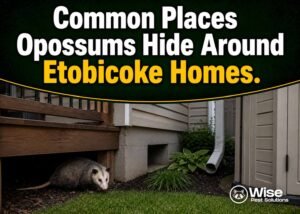
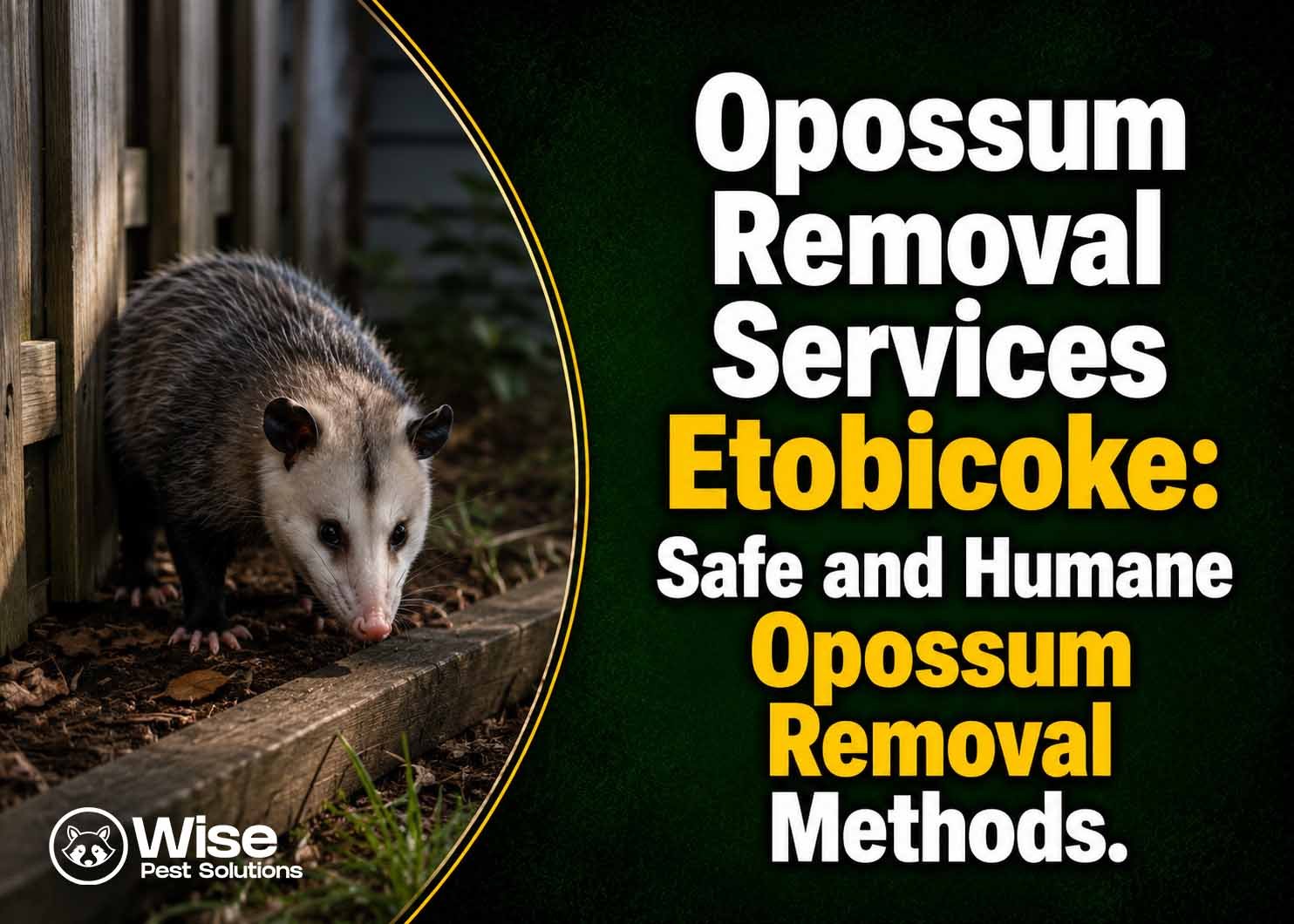
A homeowner opens the back door at night and finds an opossum beside the garbage bins. Another hears movement below the deck for several evenings. The animal may leave on its own, but regular activity near a den, crawl space, shed, or garage needs a closer look.
Opossums usually search for food and sheltered resting spaces. Problems begin when they settle below a structure, enter a building, damage weak materials, leave waste, or have dependent young in a hidden area.
Professional opossum removal Etobicoke services focus on removing the animal without causing unnecessary harm. The work should also address the food, shelter, and entry points that attracted it.
TL;DR: Humane opossum removal begins with a property inspection to confirm where the animal is hiding and whether young may be present. A professional may use controlled exclusion or trapping when appropriate, then secure entry points, provide cleanup guidance, and remove attractants that could bring wildlife back.
Objective
This guide explains how humane opossum removal works, which signs require professional attention, what methods may be used, how costs are calculated, and what Etobicoke property owners can do to prevent another wildlife problem.
Key Takeaways
- One nighttime sighting does not always mean an opossum is living on the property.
- Repeated activity near the same deck, shed, crawl space, or opening may indicate a den.
- Do not seal an opening until the area has been inspected for animals and dependent young.
- Humane removal should include inspection, removal, exclusion, and prevention.
- Garbage, pet food, fallen fruit, clutter, and open spaces below structures can attract opossums.
- Wildlife trapping and relocation must follow Ontario rules.
- Exclusion is often the most important step in preventing repeat activity.
Table of Contents
- Why Opossums Enter Etobicoke Properties
- Signs You May Need Opossum Removal
- How Humane Opossum Removal Works
- Exclusion Versus Opossum Trapping
- DIY Removal Versus Professional Wildlife Control
- How to Choose an Opossum Removal Company
- Opossum Removal Costs and Prevention
- Frequently Asked Questions
Why Opossums Enter Etobicoke Properties
Opossums are mostly active at night. They move through neighbourhoods looking for food, water, and a quiet place to rest.
In urban and suburban areas, they may shelter below decks, porches, steps, sheds, patios, garages, and other accessible structures. They will also eat a wide range of foods, including fallen fruit, garbage, pet food, vegetables, insects, and snails.
Etobicoke properties can provide several of these resources in one place. A low deck offers shelter. An uncovered garbage bin provides food. Dense vegetation creates a protected travel route.
Common attractants include:
- Open garbage and compost bins
- Pet food left outdoors
- Birdseed below feeders
- Fallen fruit
- Barbecue residue
- Accessible crawl spaces
- Gaps below sheds and decks
- Brush piles and outdoor clutter
- Damaged garage or foundation openings
- Standing water
Removing one food source may reduce activity, but it will not solve the problem if the animal has already found a secure den.
Wise Pest Solutions states that opossums may hide below decks, sheds, porches, and outdoor storage areas while searching for food, shelter, and quiet resting spaces. Its wildlife service covers Etobicoke and other GTA communities.
Signs You Need Opossum Removal Etobicoke Services
Seeing an opossum cross the yard once does not always require removal. The animal may be passing through during its normal nightly movement.
Repeated signs near the same location deserve attention.
Nighttime Movement Near One Structure
An opossum that repeatedly enters the same space below a deck, porch, shed, or set of steps may be using it as shelter.
Watch from inside or from a safe distance. Do not crawl below the structure to check.
Scratching or Movement
Noise below a floor, inside a garage, near a crawl space, or behind stored items can indicate wildlife activity.
The sound alone does not confirm the species. Raccoons, squirrels, rats, skunks, and other animals can produce similar noises. A proper inspection should identify tracks, droppings, entry points, and movement patterns before removal begins.
Droppings or Strong Odour
Waste may be found near a shelter entrance, garage wall, shed, patio, or crawl space.
Avoid touching wildlife droppings with bare hands. The affected area may require controlled cleaning after the animal has been removed.
Disturbed Garbage or Pet Food
Knocked-over bins and missing pet food do not prove that an opossum caused the problem. They do show that the property is providing an easy food source.
A camera or professional inspection can help identify which animal is visiting.
Visible Entry Damage
Opossums may use an existing weak spot rather than creating a large opening from the beginning.
Check for disturbed skirting, damaged vent covers, loose boards, gaps below doors, and openings around foundations.
Wise Pest Solutions lists scratching sounds, property damage, odours, droppings, and tracks among the signs that may support an opossum inspection.
How Humane Opossum Removal Etobicoke Services Work
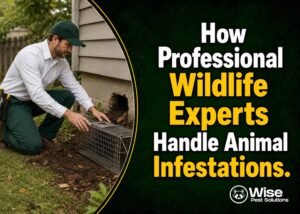
A humane service does not begin by placing a trap beside the first track. The technician needs to confirm which animal is present, how it is using the property, and whether another animal or young could be inside.
Wise Pest Solutions describes its opossum removal service as a process involving inspection, humane removal, exclusion, cleanup support, and follow-up checks.
1. Inspecting the Property
The technician checks the area where activity has been seen or heard.
The inspection may include:
- Decks and porches
- Sheds and garages
- Crawl spaces
- Exterior walls
- Foundation openings
- Outdoor storage
- Garbage areas
- Attics when access is possible
- Fences and travel routes
- Nearby food and water sources
Tracks, droppings, disturbed soil, nesting material, odour, and camera evidence can help identify the animal.
2. Checking for Young
An adult opossum may be carrying young in its pouch or on its back. Very young opossums separated from their mother may not survive without help.
This is one reason an opening should never be sealed blindly. A professional should check the timing, activity pattern, and den area before choosing a removal method.
3. Selecting a Humane Method
The appropriate method depends on where the animal is located.
Possible approaches include:
- Allowing a temporary visitor to leave naturally
- Removing food and shelter attractants
- Installing a controlled one-way exit where suitable
- Using a humane trap when necessary and lawful
- Manually removing an animal from an enclosed interior space
- Referring an injured or orphaned animal to the proper wildlife service
No single method fits every property. A one-way exit may work at one den but be unsuitable where dependent young are present.
4. Confirming the Animal Has Left
The technician should confirm that no animal remains before permanently closing the opening.
This may involve observing tracks, monitoring activity, reviewing camera footage, or checking the exclusion device.
5. Securing the Entry Point
Once the space is empty, openings can be sealed or protected with suitable materials.
Common repairs may involve:
- Deck or porch skirting
- Crawl-space access points
- Foundation gaps
- Damaged vent covers
- Loose boards
- Garage-door gaps
- Openings around utility lines
- Weak areas below sheds
Wise Pest Solutions includes entry-point sealing in its wildlife removal process because another animal may use the same opening later.
6. Providing Cleanup Guidance
Wildlife may leave droppings, urine, odour, nesting material, and food debris behind.
The service provider should explain which areas require cleaning, which materials may need removal, and whether the space can be handled safely by the property owner.
Exclusion Versus Opossum Trapping Etobicoke
Many property owners assume that trapping is the standard answer. It is only one possible method.
Humane Exclusion
Exclusion allows an animal to leave while preventing it from returning through the same opening.
It may be suitable when:
- The main entry point is known
- The animal can exit safely
- No dependent young are trapped inside
- The building can support a secure device
- Other openings have been identified
Exclusion addresses both removal and re-entry. The damaged area still needs a permanent repair after the animal is gone.
Humane Trapping
Opossum trapping Etobicoke services may be considered when the animal cannot leave through a controlled exit, is trapped inside a building, or is causing an immediate property problem.
Trapping requires regular monitoring and careful handling. It must also follow provincial wildlife rules.
Ontario states that most wild animals causing property damage may be captured and relocated without a permit, but the province also warns against moving wildlife more than one kilometre. Local restrictions and species-specific rules may apply, so removal should be planned carefully.
Relocation is not automatically the most humane result. Moving an animal away from familiar food, shelter, and den sites can create new risks. That is why inspection, exclusion, and attractant control should be considered before trapping.
DIY Removal Versus Professional Wildlife Removal Etobicoke
An opossum often looks slow and manageable. Cornering it below a deck or inside a garage can still create a difficult situation.
A frightened opossum may hiss, display its teeth, or become motionless as a defence response. These behaviours do not mean the animal is safe to pick up or handle.
| DIY Opossum Removal | Professional Wildlife Removal |
| Species may be misidentified | Tracks and activity are assessed |
| Den may be blocked too early | The space is checked before sealing |
| Dependent young may be missed | Young and nesting concerns are considered |
| Traps may be placed incorrectly | The method is selected for the location |
| Relocation rules may be overlooked | Provincial requirements are considered |
| Entry points may remain open | Exclusion is part of the plan |
| Waste may be handled without protection | Cleanup needs are identified |
| The animal may move to another area | Food, shelter, and access are addressed together |
Professional wildlife removal in Etobicoke is the safer option when an animal is inside the home, trapped in a garage, below an occupied deck, near children or pets, or difficult to access. Wise Pest Solutions lists opossum and wildlife services for residential and commercial properties in Etobicoke.
How to Choose an Opossum Control Etobicoke Company
Ask what the company plans to do before agreeing to the service.
Does the Service Start With an Inspection?
The provider should identify the animal, den location, access points, and safety concerns before recommending trapping or exclusion.
Avoid companies that promise a fixed method without seeing the property.
Are Humane Methods Explained Clearly?
The company should explain why the selected method suits the situation.
Ask how it will check for young, confirm the animal has left, and avoid trapping wildlife inside.
Is Exclusion Included?
Removal without exclusion may leave the property open to another opossum, skunk, raccoon, or other animal.
Confirm whether repairs are included, priced separately, or referred to another provider.
What Happens After Removal?
Ask whether the service includes:
- Follow-up checks
- Entry-point recommendations
- Cleanup guidance
- Odour assessment
- Prevention advice
- Written pricing
- Service limitations
Does the Company Serve Your Property Type?
Homes, rental buildings, restaurants, warehouses, retail sites, and offices have different access and scheduling needs.
Commercial opossum control Etobicoke may also require discreet service, garbage-area inspection, documentation, and coordination with tenants or staff.
What Does Opossum Removal Cost in Etobicoke?
The cost depends on the animal’s location and the amount of work needed to secure the property.
Price factors may include:
- Inspection requirements
- Number of active areas
- Access below decks or structures
- Interior versus exterior activity
- Need for trapping or exclusion
- Presence of young
- Damage to vents, skirting, or foundations
- Cleanup and sanitation
- Entry-point repairs
- Follow-up visits
- Emergency service requirements
A visible animal in an open garage may require less work than a den below a large deck with several possible access points.
Ask for a written quote that separates removal, exclusion, cleanup, repair, and follow-up charges. A low removal price may not include the work required to prevent another animal from moving into the same space.
How to Prevent Opossums From Returning
The best prevention plan removes easy food and shelter.
Take these steps:
- Keep garbage and compost lids closed.
- Do not leave pet food outside overnight.
- Clean barbecue grease and food spills.
- Pick up fallen fruit.
- Store birdseed in sealed containers.
- Remove brush piles and outdoor clutter.
- Trim dense vegetation near structures.
- Repair damaged garage and crawl-space openings.
- Install secure skirting around decks and sheds.
- Fix broken vent covers.
- Eliminate standing water where practical.
- Inspect repaired areas for new activity.
Do not seal a den opening until a professional has confirmed that no animal remains inside.
Frequently Asked Questions
Will an opossum leave on its own?
It may. Opossums sometimes use a sheltered area temporarily and move on after a short period. Repeated entry into the same structure, waste buildup, damage, or activity involving young should be assessed professionally.
Are opossums aggressive?
Opossums usually try to avoid people. A frightened animal may hiss, show its teeth, or remain still as a defence response. Give it space and do not attempt to touch or corner it.
Can I block the space below my deck?
Only after confirming that no animal is inside. Closing the opening too early can trap an adult or dependent young below the structure.
Is trapping always required?
No. Removing attractants or using a controlled exclusion method may be more suitable. Trapping is considered when the location, safety risk, or building conditions make it necessary.
Can an opossum damage my property?
Opossums often use existing openings, but their activity may disturb insulation, vents, stored materials, garbage, soil, or weak structural coverings. Waste and odour can also create cleanup concerns.
What should I do if I find a baby opossum?
Do not attempt to raise or relocate it yourself. Keep pets and people away and contact a qualified wildlife rehabilitator or wildlife professional for direction. Very young opossums may not survive without specialized care.
Schedule Humane Opossum Removal in Etobicoke
An opossum crossing the yard may not require action. An animal living below a deck, entering a garage, leaving waste, or returning to the same structure should not be ignored.
For humane opossum removal Etobicoke homeowners, landlords, property managers, and businesses can arrange, contact Wise Pest Solutions to request an inspection and quote. The company provides wildlife inspection, humane removal, exclusion, cleanup guidance, prevention advice, and follow-up support across Etobicoke and nearby GTA communities.