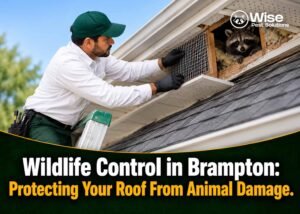

It’s 7 a.m. The kitchen manager at a plaza restaurant opens the back door and finds the garbage enclosure torn apart, a trail of grease leading up the drainpipe, and wet stains spreading across the ceiling tiles above the dry storage area. The health inspector is due next week.
That’s a raccoon on the roof, and it’s no longer just a nuisance. It’s a business problem. Good commercial wildlife removal Mississauga businesses rely on does three things in order: it gets the animals out humanely and legally, it seals every entry point so they can’t come back, and it gives you the paperwork to show inspectors, auditors and insurers what was done.
Bats are a quieter risk that many building managers miss. In 2025, Ontario confirmed 121 rabies cases, and 116 of them were the bat strain, including three in Peel Region. A warehouse or office with bats in the walls has a real health issue on its hands, not just a pest problem.
Key Takeaways
- The most common commercial problems are raccoons on flat roofs, birds nesting in signs and loading docks, bats in walls, and skunks or groundhogs under slabs and portables.
- Wildlife damage costs money. Expect roof leaks, chewed wiring, damaged HVAC units, contaminated stock and failed inspections.
- Removal must follow Ontario rules. Trapped animals stay within 1 km of the site, and some bats and most birds are protected by law.
- Exclusion is the real fix. Screening rooftop vents, sealing dock gaps and installing bird deterrents stop repeat visits.
- Documentation matters. Health inspectors, food safety auditors and insurers often want written records.
- Schedule work around your business. A good provider works early mornings, evenings or weekends so customers never notice.
Table of Contents
- What Wildlife Problems Do Mississauga Businesses Face Most?
- How Does Wildlife Put Your Business at Risk?
- Commercial Wildlife Removal Mississauga: How the Process Works
- Which Laws Apply to Wildlife Removal on Commercial Properties?
- How Can Businesses Prevent Wildlife From Coming Back?
- What Should You Look for in Commercial Wildlife Control in Mississauga?
- FAQs
- Conclusion
What Wildlife Problems Do Mississauga Businesses Face Most?
Raccoons, pigeons, bats, skunks, squirrels and groundhogs cause most commercial wildlife calls in Mississauga. The animal you see usually depends on the type of building: flat roofs draw raccoons and birds, loading docks draw pigeons, and older brick buildings draw bats.
Mississauga’s mix of plazas, warehouses, offices and restaurants gives wildlife a lot of options. The logistics corridor near Pearson, the industrial parks in Meadowvale and Heartland, and the strip plazas along Dundas, Hurontario and Lakeshore all see steady calls.
Common Problems by Animal
- Raccoons. They tear open rooftop vents, get into ceiling spaces, raid dumpsters and leave droppings on flat roofs.
- Pigeons and sparrows. They nest in signs, canopies, dock doors and warehouse rafters. Their droppings are slippery and acidic, and they damage paint and metal.
- Bats. They roost in walls, soffits and expansion joints, often without anyone knowing until staff spot droppings or a bat gets inside.
- Skunks. They den under portables, loading docks and concrete pads, and their smell can travel through HVAC intakes.
- Squirrels. They chew into roof edges and wiring, especially on older plaza buildings next to mature trees.
- Groundhogs. They dig under slabs, retaining walls and landscaping, which can weaken pavement and foundations.
- Gulls. They gather on rooftops and parking lots near food businesses and the waterfront.
How Does Wildlife Put Your Business at Risk?
Wildlife costs businesses money through property damage, health code violations, lost stock, liability claims and bad reviews. One raccoon in a ceiling can damage the roof, the insulation and the electrical system in a single season.
The Real Costs
- Failed inspections. Peel Public Health inspects food premises, and signs of animals or droppings can lead to orders, re-inspections or a closure.
- Contaminated product. Warehouses and food plants may have to throw out stock that birds or rodents have touched.
- Roof and HVAC damage. Raccoons pull back roof membranes and rip apart duct connections, which leads to leaks and repair bills.
- Fire risk. Chewed wiring in ceilings and walls is a known fire hazard.
- Slips and falls. Bird droppings on sidewalks and entrances make them slippery, which opens the door to liability claims.
- Customer trust. One photo of a raccoon in a dining room can follow a business online for years.
Health Risks for Staff and Customers
Raccoon droppings can carry roundworm eggs that stay alive in the soil for years. Pigeon and bat droppings can carry fungi that cause lung infections when the dust is breathed in. Bat bites are small and easy to miss, which is why any bat contact should be reported to public health.
Real Example From the Field
A distribution warehouse off Derry Road called us because staff kept finding droppings on pallets in one aisle. The cause was a family of pigeons nesting in the steel trusses above the dock doors, coming in every time a door opened.
We cleaned and sanitized the area, installed bird netting under the trusses and added strip curtains on the busiest doors. The client passed its next food safety audit without a note about pests.
Commercial Wildlife Removal Mississauga: How the Process Works
A proper commercial job follows five steps: site inspection, humane removal, exclusion, cleanup and documentation. Each step is planned around your hours so operations keep running.
Step 1: Site Inspection
A technician checks the full building, inside and out. That covers the roof, parapet walls, HVAC units, vents, signs, loading docks, dumpster areas, ceiling spaces and the ground around foundations.
You get a written report that lists every entry point, the animals involved and what needs to be fixed first.
Step 2: Humane Removal
Most animals are removed with one-way doors. The animal can leave the building but can’t get back in. This keeps them in their home range, as Ontario requires, and nobody has to handle them.
During baby season, usually spring and early summer, technicians check for young before sealing anything. Leaving babies behind creates a much bigger problem, both for the animals and for the smell in your ceiling.
Step 3: Exclusion
This is where the long-term value is. Typical work includes:
- Screening rooftop exhaust vents and HVAC openings with heavy-gauge steel mesh
- Sealing gaps at roof edges, soffits and expansion joints
- Installing bird netting, spikes or wire systems on signs, ledges and dock areas
- Burying L-shaped mesh around portables, decks and slabs to stop digging
- Adding dock seals, brushes or door sweeps where animals slip in
Step 4: Cleanup and Sanitizing
Droppings, nesting material and soiled insulation are removed with proper protective gear. The area is then treated with a disinfectant and deodorizer so the scent doesn’t draw new animals.
Step 5: Documentation
You receive a service report with dates, findings, work completed and photos. Keep it on file. Health inspectors, auditors and insurers often ask for proof that pests are being managed.
Which Laws Apply to Wildlife Removal on Commercial Properties?
Ontario’s wildlife rules apply to businesses just as they do to homes. Live-trapped animals must be released within 24 hours and within 1 km of where they were caught. Several bat species and most birds also have extra legal protection.
Rules to Know
- The 1 km rule. Moving a raccoon or skunk to a distant park is illegal and usually ends badly for the animal.
- Protected bats. Little brown bats, northern long-eared bats and tri-coloured bats are listed as endangered in Ontario. Exclusion work must avoid harming them, and timing matters.
- Migratory birds. Most native birds and their active nests are protected federally. Pigeons, European starlings and house sparrows are not, which is why most commercial bird work targets those three.
- No poisons or body-gripping traps for wildlife. These can lead to charges and put people and pets at risk.
- Food premises rules. Food businesses must keep pests out under Ontario’s food premises regulation, which Peel Public Health enforces.
Working with a provider who knows these rules protects you from fines and from bad publicity.
How Can Businesses Prevent Wildlife From Coming Back?
Prevention comes down to removing food, closing access points and checking the building on a schedule. Most repeat calls happen because one of those three was skipped.
A Practical Prevention Checklist
- Keep dumpsters closed and lids latched, and pressure-wash the enclosure regularly.
- Clean grease bins and the area around them often, since raccoons and rats follow the smell.
- Trim trees at least 2 metres back from the roofline.
- Inspect the roof every spring and fall, especially vents, HVAC units and parapet caps.
- Keep dock doors closed when they aren’t in use, and fix damaged seals.
- Don’t let staff feed birds or leave food scraps outside during breaks.
- Seal gaps around pipes, cables and conduits as soon as you find them.
Why Service Contracts Make Sense
For many sites, a scheduled program costs less than repeat emergency calls. A technician checks the building quarterly or monthly, catches small gaps early and keeps your records current for audits.
What Should You Look for in Commercial Wildlife Control in Mississauga?
Look for a provider with commercial insurance, flexible scheduling, written warranties on exclusion work and clear service reports. They should also handle multiple animals, because buildings rarely have just one.
At Wise Pest Solutions, we build each commercial wildlife control Mississauga plan around the site: its hours, its industry and what its inspectors expect. A restaurant on Lakeshore and a warehouse in Meadowvale have very different needs.
Questions to Ask Before Hiring
- Are you insured for commercial work, and can you provide a certificate?
- Can you work outside business hours?
- Do you provide written reports with photos?
- What warranty do you give on exclusion work?
- Do you handle birds and bats as well as raccoons and skunks?
- Can you manage multiple locations under one contract?
What Affects the Cost
There’s no flat price for commercial work, because every building is different. The main factors are:
- Building size and roof type. Large flat roofs take more time to inspect and secure.
- Access. Some jobs need a lift or roof safety equipment.
- Number of entry points. More gaps mean more materials and labour.
- Type of animal. Bat and bird work often needs special materials and timing.
- Cleanup. Heavy droppings or soiled insulation add to the job.
- Ongoing service. Monitoring contracts spread costs over the year.
Strong wildlife control services Mississauga businesses rely on will list each item in a written quote, so you can plan your budget and compare providers fairly.
FAQs
How Fast Can Wildlife Be Removed From a Commercial Building?
Most animals leave within a few days of a one-way door going up. The full job, including exclusion and cleanup, usually takes one to two weeks depending on building size and access.
Will Wildlife Removal Disrupt My Business?
It shouldn’t. Most work happens on the roof or outside the building. Inside work, like ceiling cleanup, can be scheduled early in the morning, in the evening or on weekends.
Do I Have to Tell the Health Inspector About Wildlife?
You don’t have to report it yourself, but inspectors look for signs of pests. If they find droppings or damage, being able to show a service report and a plan helps a lot.
Who Pays for Wildlife Removal, the Landlord or the Tenant?
It depends on your lease. Roof and structural repairs often fall to the landlord, while day-to-day pest control is often the tenant’s job. Check your lease and talk to your property manager early.
Can You Remove Bats Any Time of Year?
Not always. Bats raise their young in summer, and the pups can’t fly yet, so exclusion is usually avoided in June and July. Some bat species are endangered in Ontario, which adds more rules.
Conclusion
Wildlife on a commercial property doesn’t stay small for long. A raccoon on the roof becomes a leak, then a ceiling stain, then a failed inspection. Bird droppings at a dock door turn into contaminated stock. Every week you wait, the repair bill gets bigger.
The fix is the same for almost every site: remove the animals humanely, seal the building, clean up properly and keep records. Do that, and wildlife stops being a recurring cost.
Spotted signs of animals around your building? Book a commercial site inspection with Wise Pest Solutions for commercial wildlife removal Mississauga businesses can trust, scheduled around your hours, with a written report after every visit.